HANDOUT French education system part II. Post-secondary education.
University
and Institutes of Higher Education
1
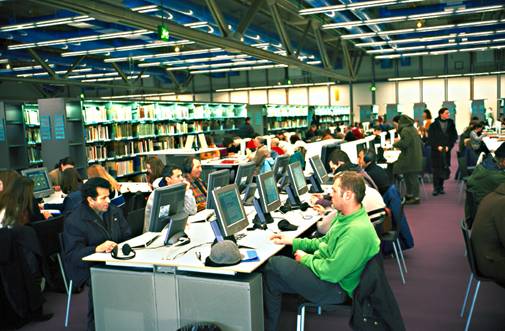
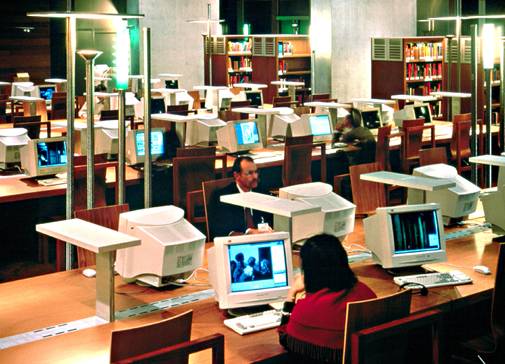
Bibliothèque nationale, Paris/
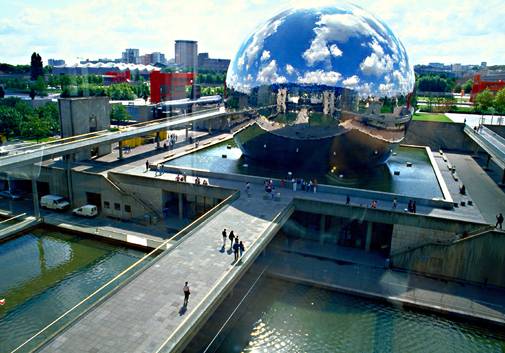
2 Cité des
Sciences, La Villette,
3
Paris/Bibliothèque, Centre Pompidou, Paris
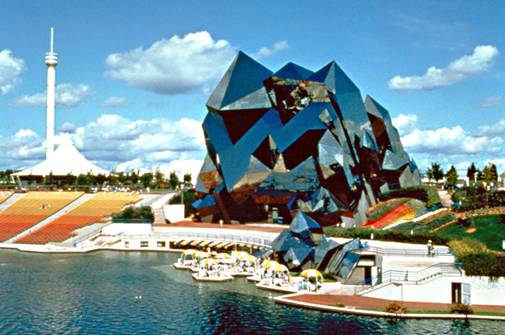
4 Science Park in Poitiers (Futuroscope) 3,4


FRENCH HIGHER EDUCATION is an
experience quite different from the USA.
It's the European approach to education. If one goes by looks and
amenities, certainly the French universities pale by comparison with American
universities.
French academia has no interest in high prestige sports teams; the emphasis is
strictly on academic matter and research.
The French have the bibliothèque Nationale (e.g lib of Congress) and it is believed that all
universities carry the same standards. All have excellent libraries.
French universities can be very old (they started in the Middle
Ages e.g La Sorbonne, teaching the Trivium and Quadrivium, based on the Classics) and have been
producing great minds. The tendency nowadays is still to consider universities
as a place for reflection and learning first and foremost.
They do not have a vocational approach.
. 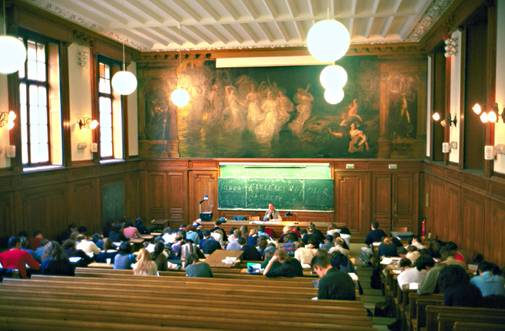
fig. Sorbonne-auditorium
1-Universities French public universities aim to give a general
education of high level in all academic areas.
These are completely subsidized by the government.
Registration fees for the academic year are in the range of approximately $125
to $750.
In some cases, additional fees to cover health insurance (sécurité sociale),
can also be incurred.
These costs do not include living expenses.
Degrees: 2 year degree= DEUG (Diplôme d'Etudes Supérieures)
BA= 3 year = Licence/BA-BSc
MA= 4 year = Maîtrise/master
Ph.D= 7 years =Doctorat
2-Grandes Ecoles
are Institutes of Higher
Education that limit the number of applicants admitted.
Very competitive.
To prepare for entrance competitions (e.g one in five
gain admission), lycée
students must enroll in preparatory classes.
(2 years PREPA): scientific, technological and economic.
These schools have a professional specialization that is not covered in
universities:
· Engineering, Business, Administration
fig. Ecole Normale Sup, Lyon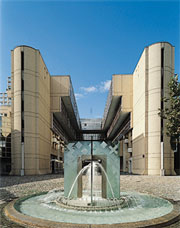
Performing Arts programs are NOT included in the university system
either.
· Visual and Applied
Arts Programs e.g. Cinema.
· Music :
National Conservatory of Music, Paris , also European Music Academy
· National School of
Fine Arts called "les Beaux Arts" for Painting
etc...and Architecture Programs;
· Higher Institutes
of Journalism ....
New Trends: France is diversifying the options for post-secondary
education
Higher education evening courses (takes longer) for people who work.
• Europe is opening
new exchange programs between universities.
Programs of the European Union: concerning
education. Focus on mobility:
Erasmus/Lingua/Socrates are European exchange programs = enable students of any European country to study for a year in another university of the Union. (See film The Spanish Inn/Auberge espagnole)
This confirms the European commitment to the study of other languages of the Union.
• Study
in France?
http://www.kiis.org/ www.Go With CEA.com
http://www.afs.org/
• French Cultural Services of the French Embassy: http://www.
frenchculture.org/
• Further reading: "Everything about French education
"sites (click on English options)
-Ministry of Education http://www.education.gouv.fr
-French cultural services of Embassy: http://www.frenchculture.org/education/france/index.html
)i
-EduFrance(student exchanges): www.edufrance.fr
-Educnet: information technology and distance
learning:www.educnet.education.fr
-Distance learning center: www.cned.fr
-Télésavoirs: topics on the internet (e.g. art)
-Cyber Papy: intergeneration on-line help (www.cyberpapy.com)